The Consent Before Commissioning: Diligencing Trade Effluent in UK Deep Tech

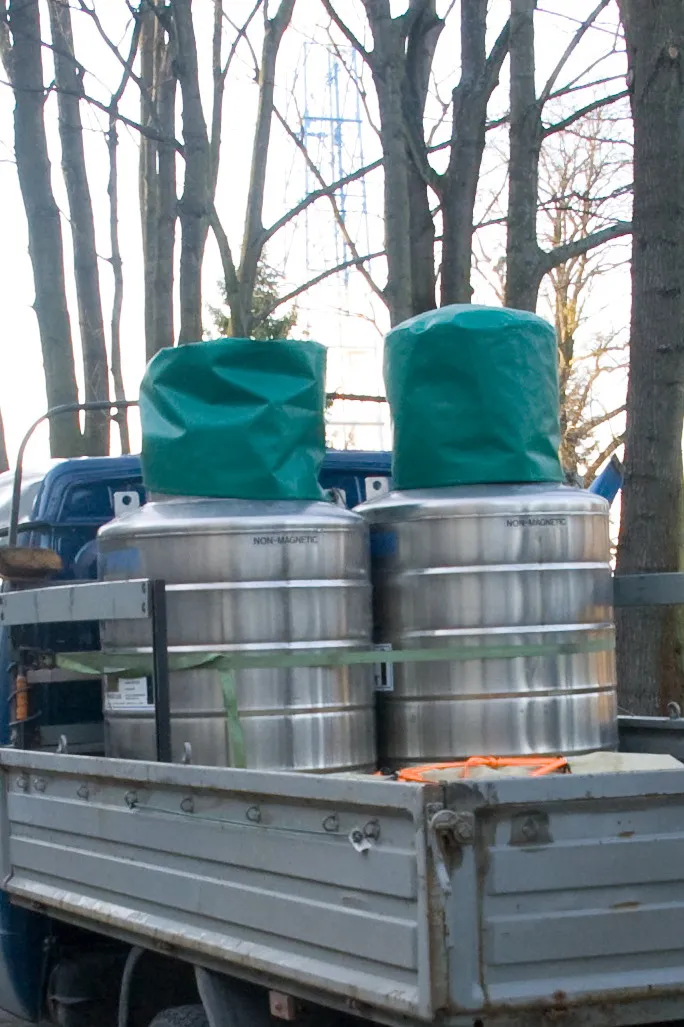
Photo: Photographer not identified. "Official photograph"., Public domain, via Wikimedia Commons
A first-of-a-kind plant in the UK is usually diligenced against three visible gates: power capacity, planning permission and the lab or site lease. A fourth gate is often missing from the checklist. Unless the process can legally send its wastewater to a sewer or a controlled watercourse, it is not a factory. It is a chemistry set with a business plan attached.
Trade effluent consents are issued by sewerage undertakers under the water industry framework, while environmental permits for discharges to controlled waters sit with the environmental regulators. In England, Wales, Scotland and Northern Ireland the names and routes differ, but the commercial logic is consistent. The consent defines what the site may discharge, at what rate, with what composition, and under what monitoring and charging regime. Those conditions can determine pretreatment capex, operating cost, throughput and ramp time. They are not administrative afterthoughts.
The permit is a process constraint
A trade effluent consent is not a generic permission to drain. It typically specifies volumetric limits, discharge rates, pH range, temperature and concentrations for parameters such as chemical oxygen demand, biochemical oxygen demand, suspended solids, ammoniacal nitrogen, phosphorus and heavy metals. It may require balancing tanks, neutralisation, filtration, settlement or sampling points. It can impose a trade effluent agreement and a charging formula based on volume and load.
For a materials spinout, a battery recycler or a biotech fermentation scale-up, those conditions can bind the process before the market does. A consent that limits COD load may cap fermentation throughput. A pH or temperature limit may force continuous correction rather than batch discharge. A metals limit may require precipitation and sludge handling that were never in the pilot-line cost model. The consent is therefore a design document as much as an environmental one.
The timeline matters as much as the terms. A sewerage undertaker may need to assess sewer hydraulic capacity and treatment works headroom. It may request sampling, flow data and process description. It may issue a consent subject to pretreatment, monitoring or a trial period. Where the receiving treatment works is already constrained, the utility may require off-site upgrades or a contribution before it will accept the load. Negotiation can run for months, and the clock often starts only after the process design is stable enough to describe.
Sewer capacity is not a given
UK water infrastructure is under pressure from population growth, storm overflow scrutiny and tighter nutrient limits. Industrial clusters that look attractive on power and labour may sit on catchments with limited treatment headroom. A site can have a promising grid connection and a willing landlord while the local sewer network has no practical capacity for a new industrial load. That risk is less visible than a power queue because there is no public register of sewer headroom by postcode.
Where no sewer route exists, tankering is possible but rarely scalable. It converts a fixed infrastructure problem into a variable logistics cost and a dependency on third-party treatment capacity. For investors, that is not a like-for-like substitute. It is a bridge that may support trials but not nameplate production. The diligence question is whether the bridge is intended as a temporary measure or has quietly become the operating model.
Discharge to a watercourse brings a separate environmental permit and a different set of limits. It may be viable for some processes, but it can attract tighter conditions and greater public scrutiny. The absence of a sewer connection does not remove the constraint; it relocates it.
What investors should ask
The practical test is whether the company can describe its effluent as precisely as it describes its product. Before underwriting, ask for the effluent profile at pilot and intended scale, including volume, load and variability. Ask which parameters are likely to bind and what pretreatment is assumed. Request the sewerage undertaker's written position, not a verbal indication. A pre-application response is useful; a formal consent is better. If the consent is conditional, read the conditions as capex and opex.
Ask whether the utility has confirmed hydraulic and treatment capacity for the nameplate case and for a plausible expansion case. Ask who pays for any upgrade and whether the cost sits with the company, the landlord or the utility. Ask about trade effluent charges and how they scale with load. Ask what monitoring, sampling and enforcement obligations apply, and whether the company has the staff to meet them. Ask whether planning permission and the lease are consistent with the discharge route. Finally, ask whether the financial model includes a permit-delay scenario. If the consent takes nine months longer than assumed, what happens to runway and commissioning?
The unglamorous moat
A secured consent with headroom can be a genuine advantage. It is harder to replicate than a generic lease and less visible to competitors than a grant award. A consent that is narrow, conditional or dependent on an upgrade is a stranding risk. The difference between the two is usually discovered in technical diligence, not in the pitch deck.
For UK deep tech, the first factory is increasingly a systems problem. Power, planning, people and permits interact. Trade effluent belongs in that set. Investors who treat it as environmental paperwork will meet it later as a schedule slip, a capex overrun or a throughput ceiling. Investors who diligence it early will understand whether the process can legally leave the building by the drain.