The Programme Manager Test: ARIA’s First Three Years, Audited

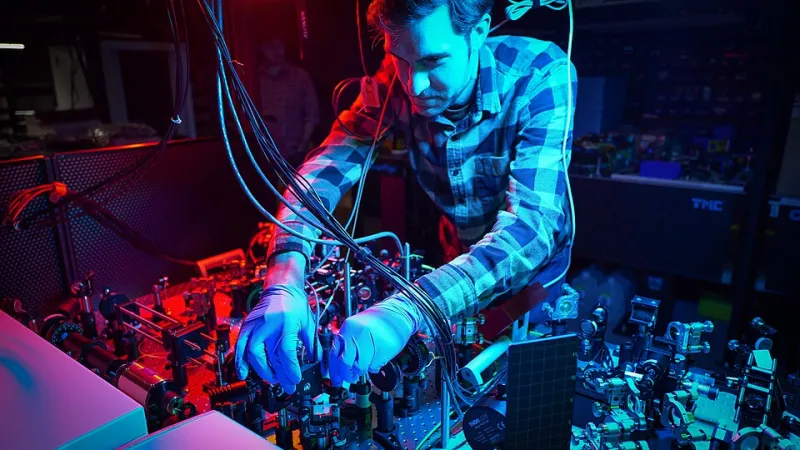
Photo: Kalyan Mukherjee, CC BY-SA 4.0, via Wikimedia Commons
When the Advanced Research and Invention Agency began funding work in 2023, it promised something Britain had struggled to sustain: high-risk research with a tolerance for failure and a bias towards action. Three years later, ARIA has enough of a ledger to be judged. The early verdict is neither a triumph nor a bust. It is an early-stage portfolio with genuine optionality and an unresolved translation problem.
That makes it a useful case study for investors trying to read public R&D signals. ARIA is not a conventional research council, and it should not be assessed like one. But it is also not yet a proven engine of DARPA-style breakthroughs. The awkward question for 2026 is how a moonshot agency demonstrates progress on a political timescale without pretending that deep tech runs to a five-year electoral clock.
A different kind of agency
ARIA’s defining feature is the programme manager. Rather than distributing grants through peer-review panels, it hires fixed-term managers with technical judgement and gives them room to design programmes, select teams and kill projects. The model is borrowed from the US defence research tradition, where programme managers are empowered to take bets and move quickly.
That structure has real advantages. It can attract people who would not thrive in a traditional funding bureaucracy. It can make decisions faster. It can create a portfolio that looks more like a venture fund than a research council. But the model depends on exceptional people, clear accountability and a bridge to whoever will fund the next stage. Without that bridge, programme managers become gifted grant administrators.
What the ledger shows
ARIA’s portfolio spans areas that fit the moonshot brief: safe artificial intelligence, neural interfaces, programmable plants, climate cooling and other engineering-heavy themes. The agency has funded teams, convened researchers and published programme intentions. Some work has produced prototypes, papers and public milestones. Other programmes have been quieter, which is not automatically a problem. Early-stage research is often quiet before it is legible.
The distinction that matters is between activity and translation. A programme can be technically active while producing little that a investor can underwrite. A spinout can be formed before it has a customer. A paper can be excellent without being a product. ARIA should be credited for creating options, but options are not outcomes. The ledger needs to show what has moved from funded work into follow-on funding, company formation, licensing or public procurement.
The follow-on test
For a moonshot agency, the most important metric is not the number of grants. It is whether the work attracts capital and customers after ARIA’s money has done its job. That is where the UK system is weakest. Deep-tech investors are few, patient capital is scarce and the gap between a government grant and a venture round can be brutal.
ARIA can help by de-risking early science, but it cannot conjure a domestic investor base. If its portfolio produces compelling teams and no follow-on, the agency will be blamed for a failure that belongs to the wider financing system. If it produces follow-on but no commercial traction, the market will be blamed. The truth is likely to be mixed. Investors should look for co-funding, syndicate formation and repeat founders as signs that the programme manager model is creating investable companies rather than well-funded projects.
The political clock
Deep tech takes time. Batteries, quantum devices, advanced materials and neural interfaces do not respect parliamentary cycles. ARIA was designed partly to escape that pressure, but it cannot escape accountability. Ministers want visible returns; the public wants evidence that money is well spent; researchers want stability. The agency has to report progress without forcing premature commercialisation.
A better reporting framework would separate technical milestones, follow-on capital, spinout formation and option value. It would also be honest about failures. A moonshot agency that cannot kill projects will not be credible. One that kills too early will never learn. The programme manager model is supposed to manage that tension. Three years is enough to see whether it is working, not enough to declare victory.
How investors should read ARIA
ARIA should be treated as a signal, not a guarantee. A programme award can indicate that a team has passed a demanding technical screen. It does not validate a market, a price point or a management team. Investors should ask who the programme manager is, what milestone the team has hit, who else is funding it and whether the intellectual property position is clean.
They should also watch the agency’s quieter programmes. Publicity is not correlated with commercial value in deep tech. Some of the most useful work may be in metrology, materials or enabling infrastructure that does not produce a striking demo. A portfolio that looks dull on a press release may look strong in a diligence data room.
The verdict so far
ARIA has earned a second look, not a blank cheque. Its programme manager model has created a more flexible way to fund risky science, and its portfolio contains real options. But the agency has not yet proved that it can convert those options into companies, follow-on rounds and public benefit at scale. That is the test for the next phase. The UK does not need another grant programme with a moonshot vocabulary. It needs an agency that can show the ledger moving from funded research to funded companies — and be honest about the ones that do not make it.